


What this program actually is
OrientationSystems-based marriage, couple and family counseling inside a CACREP counselor-education core; the catalog's own framing is that "Emphasis is placed on developmental and preventative concerns from a holistic perspective."
The dual-licensure claim is real and it is free. The 2026–27 catalog states flatly that the degree "meets the educational requirements for becoming dually licensed as a Licensed Marriage and Family Therapist (LMFT) and a Licensed Professional Clinical Counselor (LPCC) in the State of California," and the program FAQ sharpens it: graduates of any of the four concentrations qualify for the LPCC, and "Only graduates from the Marriage, Couple, & Family Counseling (MCFC) concentration are eligible for licensure in the State of California as an LMFT." Both licenses come out of the same 60 units — 30 units of core shared with the career, rehabilitation and school concentrations, 29 units of MCFC concentration, and a 1-unit culminating course. There is no LPCC bolt-on, no extra trauma or career course to petition for, no additional pre-degree hour requirement. Several California programs advertise dual eligibility and then charge nine to twelve units for it; here the arithmetic in the catalog closes at exactly 60.
What you buy for that is a counselor-education degree, not a family-therapy degree, and the paperwork says so. The program is CACREP-accredited in all four concentrations, and describes the MCFC concentration as "COAMFTE aligned but not COAMFTE accredited" — a precise and slightly unusual admission. The culminating experience is not a thesis or a case conceptualization but the Counselor Preparation Comprehensive Examination, a multiple-choice exam covering the eight CACREP core areas, taken through the 1-unit EDC 500 in your final semester. The FAQ explains the degree title in the same register: "The title of the degree complies with CACREP accreditation standards and embodies the focus on counseling in the program, as opposed to psychology or other helping professions." Only two of the concentration courses (EDC 234 and EDC 235) are family-therapy seminars, plus a 2-unit couples course and a 1-unit systems lab — the systems content is real but it is a minority of the units.
It is a rigid program, and the rigidity is stated rather than discovered. Three years, full-time only, in person only: "Classes are in-person at Sacramento State campus and are not available online or via a hybrid format. Students are only admitted on a full-time basis." Fall admission only, no spring or summer intake, and no transfer credit at all — "we require each student of the program to attend the required cohort sequence." Students take 9–12 units each fall and spring, in a cohort, on a designated sequence, with classes offered during the day, late afternoon and evening. There is no GRE ("we do not require or accept GRE scores"), but there is an in-person Interview Day with experiential activities and a writing prompt. California-resident cost is the highest of the three CSUs compared here, at $5,683 per semester for 6.1+ units in 2026–27 ($4,274 tuition plus $1,409 in campus fees), or about $34,000 across three years of full-time enrollment before living costs.
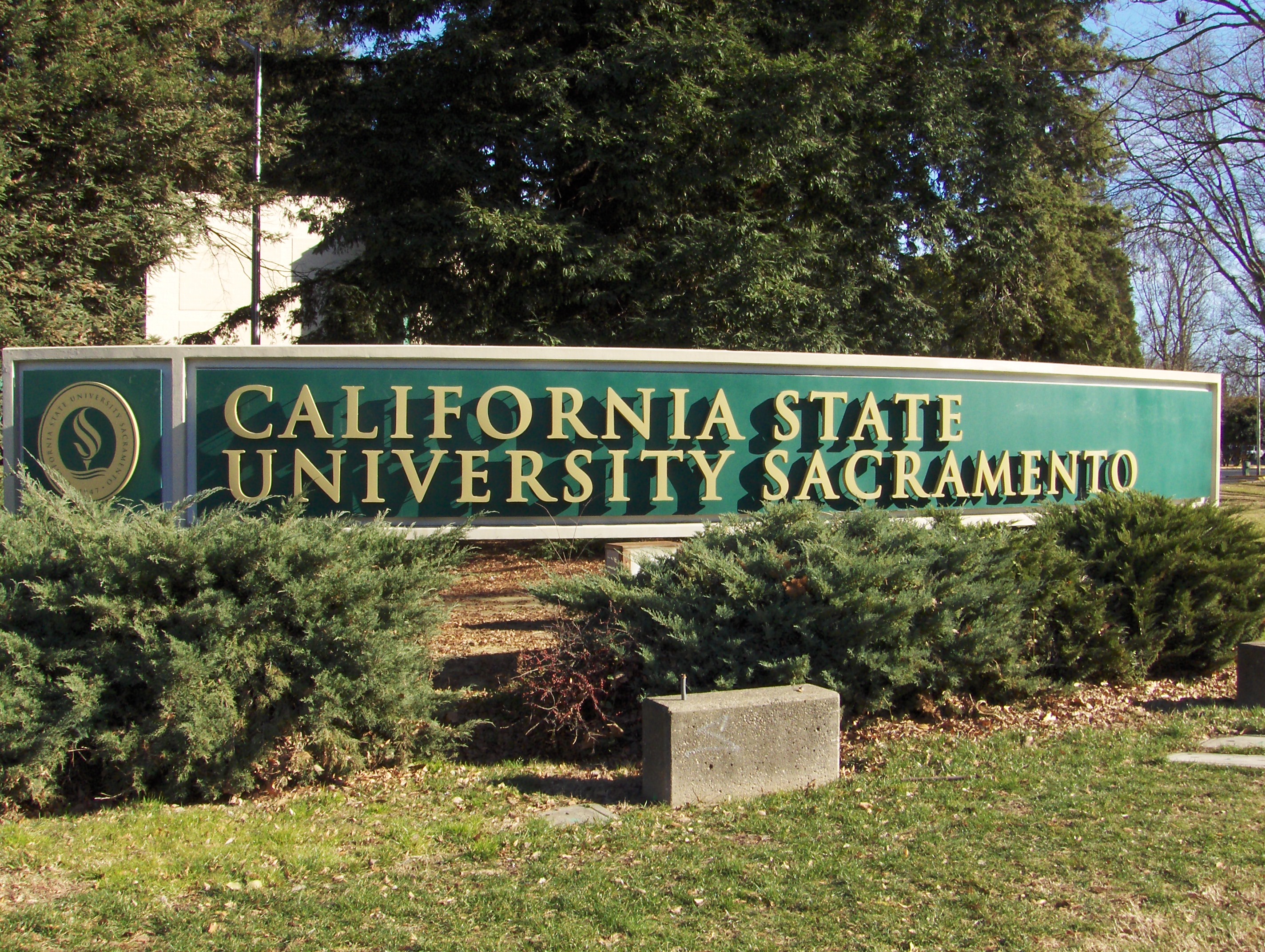
See it and hear it
The courses that define it
Every California program teaches law and ethics, assessment and a survey of theories. These are the courses that are not on every list — the ones that tell you what this particular faculty believes therapy is. The quoted text is the catalog’s own; the note underneath each one is mine.
Counseling Skills Lab
"This course provides supervised practice in acquiring, developing, and practicing interviewing skills and counseling micro-skills under supervision and observation... Emphasis is placed on becoming reflective practitioners by analyzing counselor and client qualities, building self-awareness and self-efficacy, receiving and implementing feedback, and evaluating their own and peers' developing clinical judgment."catalog ↗
Why it is worth noticingTaken as a corequisite with EDC 216 Counseling Theory in the first fall, and recommended within your first six units — meaning you are being observed doing counseling micro-skills in your first semester, before you have taken diagnosis, ethics or family theory. It is graded credit/no credit and is a prerequisite for the group course, which is in turn a prerequisite for practicum, so the whole clinical chain hangs off it.
Advanced Skills in Marriage and Family Counseling
"Structured observation and supervised practice in marriage, couple, and family counseling. Application of material learned in EDC 234 to build on practice and use of systems theories and techniques. Emphasis on establishing relationships, interviewing techniques with multiple clients, assessment techniques, setting goals, developing theory based treatment plans using systems theories, and learning to think systemically. Laboratory two hours."catalog ↗
Why it is worth noticingA one-unit, two-hour lab that exists only for the MCFC concentration and is a prerequisite for practicum for MCFC students specifically — the other three concentrations have their own gate course. The phrase "interviewing techniques with multiple clients" is the whole point: it is the only place in the sequence dedicated to the mechanics of having more than one person in the room, which is the skill the LMFT scope actually turns on.
Counseling Practicum
"Supervised counseling practice in Center for Counseling and Diagnostic Services (CCDS) and/or school settings... Basic requirements: 100 clock hours with at least 40 client contact hours, 1 hour per week of individual/triadic supervision, and one and half hours per week of group supervision."catalog ↗
Why it is worth noticingThe unusual part is not the hour count, which is standard CACREP, but the enforcement: it is credit/no-credit, the fieldwork handbook sets floors of 13 hours of individual/triadic and 21 hours of group supervision logged in SONIA, a supervisor can remove you from the clinic outright (an immediate No Credit and referral for remediation), and No Credit means you are disenrolled from internship. A second No Credit is dismissal from the program.
Advanced Seminar: Marriage and Family Counseling
"This course focuses on advanced concepts and principles in family therapy, including working with children and adolescents in concert with families and other subsystems... Issues include clinical, ethical, legal, and diversity considerations, including migration; as well as managed care and continuum of care."catalog ↗
Why it is worth noticingTaken as a corequisite with practicum, so the advanced systems theory lands in the same semester you first sit with families at the clinic. Two things in the description are unusual for a California MFT syllabus: migration named explicitly as a clinical-diversity consideration rather than a footnote, and managed care and continuum of care taught as clinical content rather than left to a business-of-practice elective.
Couples Counseling
"Focuses on applying major schools of couples and sex therapy to actual practice. Issues include evaluation of couples, interviewing strategies, power, diversity, ethical and legal considerations, treatment principles and practice, as well as outcome research in couples therapy. Lecture/discussion/practice."catalog ↗
Why it is worth noticingNote the unit count: two, not three, and it requires both EDC 212 (Gender and Sexuality) and EDC 234 first. Couples work is treated as a capstone application of the sexuality course rather than a standalone survey, and it is one of the few couples courses in the state that names power and outcome research in its own description.
Master's Culminating Experience: Comprehensive Examination
"Students must pass the CPCE to demonstrate understanding of the 8 core content areas" — Professional Counseling Orientation & Ethical Practice; Social & Cultural Diversity; Human Growth & Development; Career Development; Counseling & Helping Relationships; Group Counseling & Group Work; Assessment & Testing; and Research & Program Evaluation.catalog ↗
Why it is worth noticingThe culminating experience is a national multiple-choice exam, not a thesis, project or oral case defense, and you must pass it at a cut score set by the program. It requires Advancement to Candidacy on file and a department petition the semester before. If you are considering doctoral study later, note that this program produces no thesis and no written research artefact by default.
The whole degree, term by term
What you would actually take, in the order you would take it. Sequences change; check the current catalog before you count on any single term.
Cohort-based, full-time, three years, fall entry only, 9–12 units each fall and spring. Sacramento State publishes the requirements as three unit blocks rather than a term-by-term grid — no public roadmap document was found — so the blocks below are the catalog's own groupings for 2026–27. What the FAQ and course prerequisites do fix in time: EDC 216 and EDC 280 are taken together in the first fall; EDC 219 requires both; practicum (EDC 475) falls in the fourth semester; internship (EDC 480, twice) occupies the whole third year; EDC 500 is the final semester. Two courses that appear in the EDC catalog and might be assumed to be part of this degree are not — EDC 230 Law and Ethics for Marriage, Family, and Child Counseling and EDC 232 Family Violence are not in the MCFC requirement list; the core's EDC 252 carries law and ethics instead. course sequence ↗
60units in total
- EDC 210 Advocacy, Social Justice, and Cultural Foundations in Counseling (3)
- EDC 214 Dynamics of Human Development (3)
- EDC 216 Counseling Theory (3)
- EDC 218 Assessment In Counseling (3)
- EDC 231 Diagnosis and Treatment Planning (3)
- EDC 233 Substance Use and Addiction Counseling (3)
- EDC 244 Trauma and Crisis Counseling (3)
- EDC 250 Education Research (3) — serves as the Graduate Writing Intensive course for Advancement to Candidacy
- EDC 252 Legal and Ethical Issues in Professional Counseling (3)
- EDC 260 Career Development (3)
- EDC 212 Gender and Sexuality in Counseling (3)
- EDC 219 Group Processes in Counseling (3)
- EDC 234 Seminar: Marriage and Family Counseling (3)
- EDC 254 Counseling and Psychotropic Medicine (3)
- EDC 235 Advanced Seminar: Marriage and Family Counseling (3)
- EDC 236 Couples Counseling (2)
- EDC 280 Counseling Skills Lab (2)
- EDC 475 Counseling Practicum (3)
- EDC 476 Advanced Skills in Marriage and Family Counseling (1)
- EDC 480 Counseling Internship (6) — taken twice, 3 units each, over two separate semesters
- EDC 500 Master's Culminating Experience: Comprehensive Examination (1) — the CPCE, taken in the final semester, Advancement to Candidacy required first
How practicum actually works
Californian clinical training runs in two legally distinct stages, and the difference decides what a program can and cannot do for you.
A trainee is a student. You see clients while still enrolled, at a site your program approves, supervised by someone the site provides. This is practicum, and it is the stage a program controls. An associate — registered with the Board after you graduate — is no longer a student, is usually paid, and is working toward the 3,000 hours the license requires. The Board renamed this stage from “intern” to “associate” in 2018, so any page still saying “MFT intern” is quoting something out of date.
Hours you bank as a trainee count toward the 3,000, up to a limit, which is why the size and quality of a program’s placement matters long after graduation: a student who leaves with 1,000 hours starts the associate years a third of the way through them, and one who leaves with the 225-hour minimum starts at the beginning.
Practicum is also where a degree most often stops being on schedule. Coursework runs on a calendar the school controls; placement does not. The questions that matter are therefore all about who owns the problem of finding you a site — and the answer differs enormously between programs on this list.
What happens after the degree →
You apply, with the school’s help
There is an approved-site list and real support, and the seat is still yours to win. Most programs are here and most students manage it. Ask for last year’s numbers rather than the policy: how many students placed on the first round, and how many had to extend.
All counseling CIT's must interview with approved Internship sites, CIT's will not be placed at sites. ... CIT's may interview with up to three sites initially, CIT's who fail to obtain a internship offer will not be enrolled in EDC 480 that semester which will delay graduation ... CIT's will only apply to sites that have an active MOU/ Agreement with the MS Counseling Program the school’s own page →
The school runs its own training clinic. Center for Counseling and Diagnostic Services (CCDS) Owning a clinic and holding a seat in it are different things, so this sits beside the model above rather than replacing it.
The two halves work on completely different principles, and prospective students routinely miss the second one. Practicum is handed to you: every MCFC student does EDC 475 at the on-campus CCDS, seeing community clients — individuals, couples, families, children and adolescents — under the direct observation of program faculty, with recording consent forms supplied by the clinic. Internship is not handed to you. The fieldwork handbook is explicit: "All counseling CIT's must interview with approved Internship sites, CIT's will not be placed at sites... sites will select CIT's to work with their clients." You may interview with up to three sites initially, and you may only approach sites that already hold an active MOU with the program; a site without one has to petition the Fieldwork Coordinator a full year ahead and the request may be refused. The program softens this with a spring Site Fair and faculty and Internship Coordinator support, but the consequence of failing to land a placement is severe — no enrollment in EDC 480 that semester, delayed graduation, a remediation plan, and dismissal from the program if you fail to place after two semesters. Supervision during internship is split: one hour a week of individual or triadic supervision from the licensed on-site supervisor, plus one hour fifty minutes of weekly group supervision led by a Sacramento State faculty member, at which you must present audio or video of a session with a transcription. Almost all placements are unpaid — "A few of the placements are paid internships; however, the vast majority are not." No relational (couple or family) hour sub-minimum is published for either stage; CACREP's direct-service floor requires individual and group work and merely permits couple/family hours, so a student who wants relational hours before graduating has to engineer them through site choice. source ↗
Will this degree travel
Not COAMFTE accredited
That is not a defect — 66 of the 78 institutions on the Board’s list are in the same position, including most of the Cal States, and their graduates license in California every year.
It becomes a problem if you leave. Several states will not accept a non-COAMFTE degree without remedial coursework, and a few will not accept it at all. If there is any chance you move, check the destination board’s rules before you enroll, not after.
What the Board requires of any qualifying degree →
What it is, on paper
Explicitly states dual LMFT + LPCC educational eligibility
What it costs
This program does not publish a tuition figure anywhere I could find it. 43 of the 78 on the Board’s list are the same. That is a fair thing to ask admissions directly, and the speed and specificity of the answer tells you something on its own.
What a month costs to live on while you study →
Getting in
A grade point average of at least 3.0 (on a 4.0 scale) in the last 60 semester (or 90 quarter units) source →
How its graduates did on the Board’s exam
Counting every attempt rather than only first attempts, the figure is 64% across 212 sittings here, against 66% statewide. First attempts are the fairer comparison — counting resits measures how many tries people needed rather than how many passed, and it penalises a school whose graduates keep going.
On the separate California Law and Ethics exam, 87% of this school’s 122 first-time candidates passed, against 80% statewide.
Recorded by the Board as California State University, Sacramento. Its list is kept by institution and its names lag: a school that has since renamed appears under the name it had when the candidates sat.
What this number is, and what it is not
It describes candidates, not teaching. In 2022 the Council on Social Work Education removed licensing-exam pass rates from its accreditation standards, saying the data “may not be an equitable measure of program outcomes” — after the social-work exam board’s own analysis found first-time pass rates of 84% for white candidates and 45% for Black candidates. A program that enrolls more career-changers and more students of color will post a lower rate while teaching at least as well. The accrediting body with the most reason to want this metric examined it and stopped using it.
The denominator is not this year’s students. These are people who sat the exam during the window, often several years after graduating and sometimes after the program changed shape or owner.
It is published here because it is a real, official figure that is otherwise almost impossible to find — and it is published on this page only. There is no pass-rate column in the directory, nothing is sorted by it, and no school on this site is ranked against another.
July 2018 - December 2024, pooled (13 semiannual BBS reports) · the Board’s published exam results by school →
What people say about it
Quoted where the wording carries the meaning, linked in every case, opening in a new window. The tags are my reading of each source, not a measurement, and the unflattering ones are here too.
What to ask before you apply
None of these are answered on a program page, and all five change what the degree is actually worth to you.
The single question that separates programs. Ask for a list of current sites, and ask plainly whether the program places you or expects you to find your own. A rural or online student unable to find a site cannot graduate.
The Board publishes this by school, so the program cannot be the only source. Ask anyway, and see whether the answer matches.
Per-unit rates move. Multiply by the actual unit count and add campus fees before comparing anything.
The 500 couples-and-families hours are carved out of the 1,750 clinical ones, and they are the category associates most often finish short on. A program placing students in adult individual settings will not generate them.
Sometimes yes, sometimes with extra units, sometimes only in one delivery format. Get it in writing rather than from a brochure.
What I could not establish
Everything above is sourced. These are the things I looked for and could not establish - take them to admissions, and note how quickly and precisely they answer.
- No cohort size is published anywhere — not in the catalog, the FAQ, the fieldwork handbook or the department page. "A limited number of students" is as specific as it gets.
- No term-by-term roadmap is published publicly. The FAQ confirms a cohort sequence exists and states which semester practicum and internship fall in, but the sequence document itself is only given to admitted students.
- No standalone public page for the Center for Counseling and Diagnostic Services was found — no fees, hours, location within campus, or client volume. The clinic is described only inside the catalog and the fieldwork handbook.
- No relational (couple/family) hour sub-minimum is published for practicum or internship.
- Application deadline dates are not published in any evergreen document; the FAQ points to a page that updates annually.
- Nothing credible was found in student discussion forums. Reddit search endpoints were unreachable during this pass, and an earlier survey of r/therapists, r/askatherapist, r/psychologystudents, The GradCafe and Student Doctor Network turned up no Sacramento State counseling thread worth citing. The voices above are all from the program's own documents.
Sources for this page (6)
- Sacramento State Catalog 2026–27 — MS in Counseling (Marriage, Couple, and Family Counseling)
- Sacramento State Catalog 2026–27 — Counselor Education (EDC) course descriptions
- Master of Science in Counseling Fieldwork Handbook, 2025 (PDF)
- MS in Counseling Frequently Asked Questions (PDF)
- Counselor Education program page
- Bursar — Tuition, Fees & Living Costs, 2026–27