


What this program actually is
OrientationEvidence-based practice and case formulation; faculty are deliberately eclectic (CBT, behavioral, mindfulness, psychodynamic, cross-cultural, feminist, health psychology) rather than committed to one model
Start with the name, because it is the thing most likely to confuse you. This is an M.S. in Clinical Psychology, awarded by the Psychology department, not an MFT or counseling degree — and it is nonetheless a standard route to California LMFT licensure. The SJSU catalog puts it plainly: "The required academic course work and supervised fieldwork of 60 semester units meets the course work requirements for the California State Marriage and Family Therapist (MFT) license and most of the requirements for the Licensed Professional Clinical Counselor (LPCC) license." The operative words are "most of." Per the program's student handbook, LPCC candidates must additionally take EDCO 266 (Career Counseling), which sits outside the 60-unit degree and requires a special petition to enroll in extra units, and must accumulate 280 pre-degree field hours instead of the 150 required on the MFT track. So: MFT by default, LPCC only if you deliberately bolt on the extra course and hours.
Being housed in a psychology department rather than a counselor-education department changes the curriculum in visible ways. You take two separate semester-long psychopathology courses — PSYC 210 (adults) and PSYC 211 (children) — where most CA MFT programs teach one combined diagnosis course. You take a full graduate clinical assessment course (PSYC 203A) that also satisfies the university's graduate writing requirement, a clinical psychopharmacology course, and an applied research-methods course. The culminating experience is not a portfolio or a paper on a topic: it is a 30–35 page APA case conceptualization of a client you actually treated, followed by an oral defense in front of two faculty examiners in a professional case-conference format, with 80% required to pass and dismissal after a second failure. What you do not get is depth in family systems: only PSYC 208 (Family Assessment and Intervention) and PSYC 209 (Psychology of Contemporary Families) are systems courses, and there is no COAMFTE accreditation.
It is also, by a wide margin, the smallest of the three. SJSU says it "seek[s] to build a cohort of 12-14 students each year," full-time only, no part-time, evening, hybrid or online option, meeting on campus three to four days a week. The barrier to entry is not a test — no GRE — but coursework and prior clinical experience: six specific undergraduate psychology prerequisites, at least 30 semester units of psychology overall, 3.0 GPA both in psychology and in the last two years, at least 100 hours of applied clinical experience before you apply (crisis text-line volunteering explicitly does not count), and one of your three letters must come from a clinical supervisor. Applications close January 1, interviews are in March, offers go out mid-April.
See it and hear it
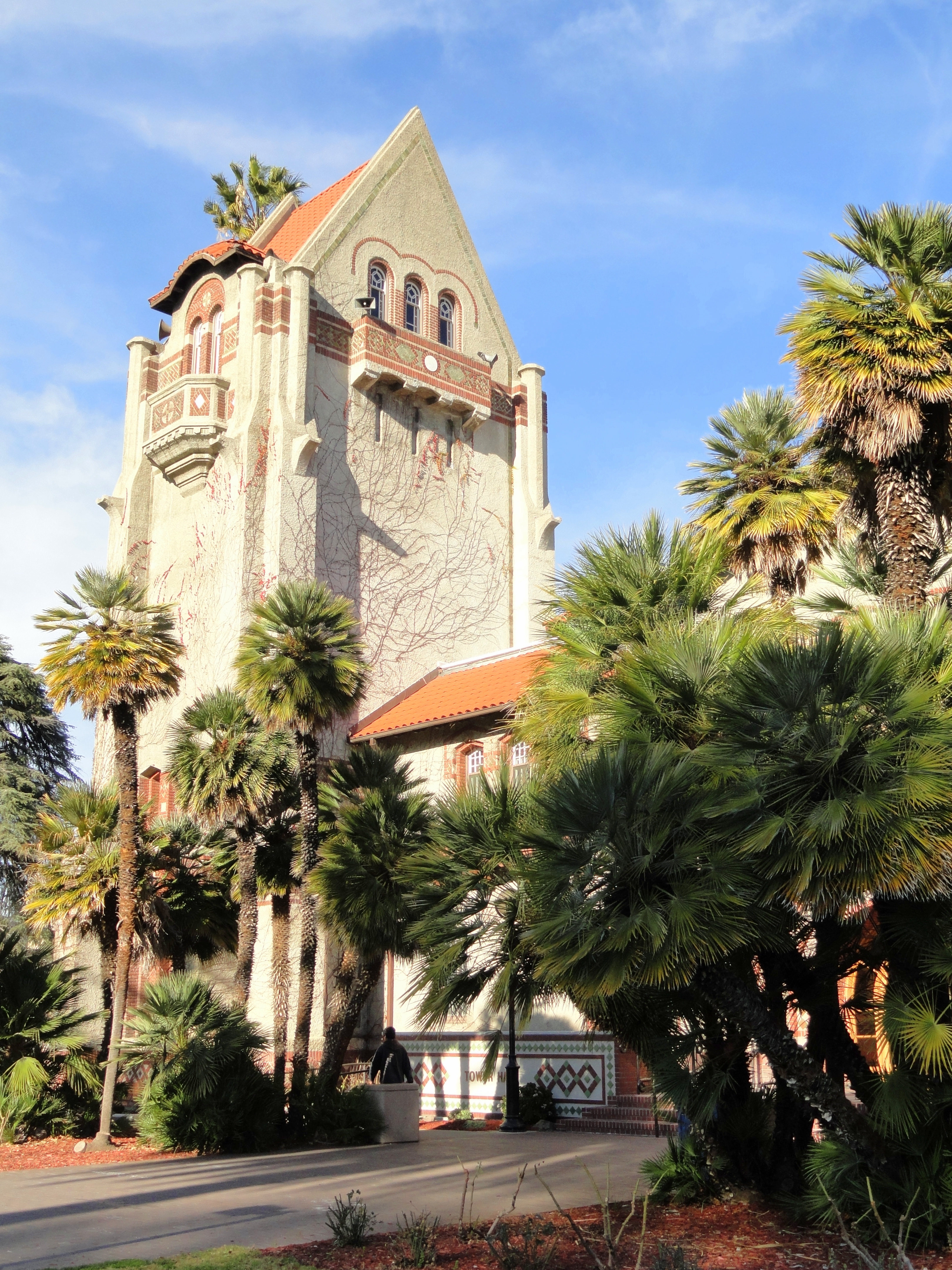
The courses that define it
Every California program teaches law and ethics, assessment and a survey of theories. These are the courses that are not on every list — the ones that tell you what this particular faculty believes therapy is. The quoted text is the catalog’s own; the note underneath each one is mine.
Clinical Assessment I
An in-depth introduction to objective, projective and behavioral assessment techniques used in the clinical evaluation of the behavior and functioning of adults, children and families. Satisfies GWAR: Graduation Writing Assessment Requirement.catalog ↗
Why it is worth noticingProjective testing in a master's-level therapy curriculum is a psychology-department artifact — most MFT programs teach assessment as intake interviewing and DSM coding. That this course also carries the university's graduate writing requirement tells you the program treats assessment writing, not therapy technique, as the core professional literacy.
Advanced Psychopathology
Advanced course to provide knowledge and experience in the classification and treatment of disorders of adulthood as they are identified in mental health settings. Critical review of research related to the evaluation of treatment strategies.catalog ↗
Why it is worth noticingPaired with PSYC 211, this gives you two full semesters of psychopathology — adult and child taught separately. Almost no California MFT-qualifying program spends a full year on diagnosis, and the 'critical review of research related to the evaluation of treatment strategies' framing is what the department means by evidence-based practice.
Child Psychopathology
An overview on the nature, assessment and treatment of Child Psychopathology. Emphasis will be placed on understanding DSM diagnoses from a developmental perspective. Objective methods of assessment and empirically supported treatments will be covered.catalog ↗
Why it is worth noticingRequired in the very first semester, before any practicum. Reading DSM categories through a developmental lens and pairing them with 'empirically supported treatments' is the clearest single statement of the program's orientation — it is training you to be a diagnostician who treats, not a systems thinker who reframes.
Multiculturalism, Ethnicity and Gender in Psychotherapy
Theoretical and practical understanding of multiculturalism, ethnicity and gender in clinical practice, including social, cultural and psychological factors that affect therapeutic intervention within individuals, couples and families.catalog ↗
Why it is worth noticingWorth flagging because the course was recently rewritten: in the 2024-25 catalog it was titled 'Gender and Ethnic Issues in Counseling and Therapy' and described in terms of 'differing socialization, psychological structures, values and cultural assumptions.' The current title and text are broader. If you are comparing older reviews of this program, the multicultural requirement you read about is not quite the one you would take.
Family Assessment and Intervention
An interdisciplinary exploration of how therapists can analyze and change interpersonal dynamics in couples and families.catalog ↗
Why it is worth noticingThis is the program's single dedicated couples-and-families intervention course, and it sits in the final semester. If family systems work is why you want to be an MFT, note how little real estate it occupies here compared with SDSU's year-long theory sequence — and that its catalog description is one sentence long.
Field Work in Psychology
Supervised field work experience in outside agency settings. Course may be repeated twice for up to 6 units. Grading: Credit/No Credit. Note(s): Open only to students in the MS Clinical program.catalog ↗
Why it is worth noticing'Outside agency settings' is the whole story: there is no in-house SJSU training clinic behind a one-way mirror. Your clinical hours come from a community agency you go out and secure yourself, and the course exists mainly as the registration vehicle that makes those hours count for the BBS.
The whole degree, term by term
What you would actually take, in the order you would take it. Sequences change; check the current catalog before you count on any single term.
Full-time cohort, lockstep, no part-time option; five 3-unit courses every semester for four semesters, starting in Fall. The sequence below is the department's own 'Required Sequence of Courses' PDF, whose course codes all resolve in the SJSU catalog. The department's HTML curriculum page shows a slightly different version of the same grid (PSYC 223 and PSYC 265 in place of PSYC 232 and PSYC 291); neither PSYC 223 nor PSYC 265 appears in the current catalog, so the PDF is used here. course sequence ↗
60units in total
- PSYC 203A Clinical Assessment (3)
- PSYC 211 Advanced Child Psychopathology (3)
- PSYC 222 Ethnic and Gender Issues in Counseling and Psychotherapy (3)
- PSYC 228 Professional Ethics for Psychologists (3)
- PSYC 258 Methods of Psychotherapy/Counseling Procedures (3)
- PSYC 209 Modern Family (3)
- PSYC 210 Advanced Adult Psychopathology (3)
- PSYC 212 Life Span Development (3)
- PSYC 225 Group Counseling (3)
- PSYC 232 Clinical Psychopharmacology (3)
- PSYC 224A Clinical Psychology Practicum I (3)
- PSYC 291 Methods & Design for Applied Research (3)
- PSYC 243 Field Work (3)
- PSYC 260 Crisis/Trauma Counseling (3)
- PSYC 298 Masters Project (3)
- PSYC 208 Family Therapy (Family and Couples) (3)
- PSYC 226 Addictions Treatment (3)
- PSYC 224B Clinical Psychology Practicum II (3)
- PSYC 243 Field Work (3)
- PSYC 298 Masters Project (3)
How practicum actually works
Californian clinical training runs in two legally distinct stages, and the difference decides what a program can and cannot do for you.
A trainee is a student. You see clients while still enrolled, at a site your program approves, supervised by someone the site provides. This is practicum, and it is the stage a program controls. An associate — registered with the Board after you graduate — is no longer a student, is usually paid, and is working toward the 3,000 hours the license requires. The Board renamed this stage from “intern” to “associate” in 2018, so any page still saying “MFT intern” is quoting something out of date.
Hours you bank as a trainee count toward the 3,000, up to a limit, which is why the size and quality of a program’s placement matters long after graduation: a student who leaves with 1,000 hours starts the associate years a third of the way through them, and one who leaves with the 225-hour minimum starts at the beginning.
Practicum is also where a degree most often stops being on schedule. Coursework runs on a calendar the school controls; placement does not. The questions that matter are therefore all about who owns the problem of finding you a site — and the answer differs enormously between programs on this list.
What happens after the degree →
You find your own site
Securing a placement is your responsibility. A student who cannot find a site cannot graduate, and that risk is highest if you are rural, studying online, or need Spanish-language or specialty hours.
You want to apply to and interview at 3 places minimally [...] If you apply to agencies that we have not been (or have not been in a while), you MUST discuss this with the Clinical Program Director (e.g., outside of Santa Clara County; agencies we have not had students at before) the school’s own page →
There is no SJSU-run training clinic for this program. Students secure their own community fieldwork site; the program director provides information and contacts and the department runs an annual fieldwork fair in January, but choosing and landing the placement is the student's job, and most agency application deadlines fall in February and March. You must have a licensed supervisor on site or readily available. Registration is through PSYC 243 every semester you are at a placement, and there is a documented squeeze at the end: if you finish the fourth semester short of hours you must see clients over the summer within 90 days of the semester's end, or enroll (and pay) for an additional course for those hours to count. source ↗
Will this degree travel
Not COAMFTE accredited
That is not a defect — 66 of the 78 institutions on the Board’s list are in the same position, including most of the Cal States, and their graduates license in California every year.
It becomes a problem if you leave. Several states will not accept a non-COAMFTE degree without remedial coursework, and a few will not accept it at all. If there is any chance you move, check the destination board’s rules before you enroll, not after.
What the Board requires of any qualifying degree →
What it is, on paper
Explicitly BBS-approved for CA MFT; program states it has made no determination of licensure eligibility in any state other than California
What it costs
This program does not publish a tuition figure anywhere I could find it. 43 of the 78 on the Board’s list are the same. That is a fair thing to ask admissions directly, and the speed and specificity of the answer tells you something on its own.
What a month costs to live on while you study →
Getting in
Note that we do NOT require GRE scores for our program application. source →
How its graduates did on the Board’s exam
Counting every attempt rather than only first attempts, the figure is 91% across 53 sittings here, against 66% statewide. First attempts are the fairer comparison — counting resits measures how many tries people needed rather than how many passed, and it penalises a school whose graduates keep going.
On the separate California Law and Ethics exam, 93% of this school’s 73 first-time candidates passed, against 80% statewide.
Recorded by the Board as San Jose State University. Its list is kept by institution and its names lag: a school that has since renamed appears under the name it had when the candidates sat.
What this number is, and what it is not
It describes candidates, not teaching. In 2022 the Council on Social Work Education removed licensing-exam pass rates from its accreditation standards, saying the data “may not be an equitable measure of program outcomes” — after the social-work exam board’s own analysis found first-time pass rates of 84% for white candidates and 45% for Black candidates. A program that enrolls more career-changers and more students of color will post a lower rate while teaching at least as well. The accrediting body with the most reason to want this metric examined it and stopped using it.
The denominator is not this year’s students. These are people who sat the exam during the window, often several years after graduating and sometimes after the program changed shape or owner.
It is published here because it is a real, official figure that is otherwise almost impossible to find — and it is published on this page only. There is no pass-rate column in the directory, nothing is sorted by it, and no school on this site is ranked against another.
July 2018 - December 2024, pooled (13 semiannual BBS reports) · the Board’s published exam results by school →
What people say about it
Quoted where the wording carries the meaning, linked in every case, opening in a new window. The tags are my reading of each source, not a measurement, and the unflattering ones are here too.
What to ask before you apply
None of these are answered on a program page, and all five change what the degree is actually worth to you.
The single question that separates programs. Ask for a list of current sites, and ask plainly whether the program places you or expects you to find your own. A rural or online student unable to find a site cannot graduate.
The Board publishes this by school, so the program cannot be the only source. Ask anyway, and see whether the answer matches.
Per-unit rates move. Multiply by the actual unit count and add campus fees before comparing anything.
The 500 couples-and-families hours are carved out of the 1,750 clinical ones, and they are the category associates most often finish short on. A program placing students in adult individual settings will not generate them.
Sometimes yes, sometimes with extra units, sometimes only in one delivery format. Get it in writing rather than from a brochure.
What I could not establish
Everything above is sourced. These are the things I looked for and could not establish - take them to admissions, and note how quickly and precisely they answer.
- SJSU does not publish an acceptance rate or an applicant count for this program. The only hard number is the target cohort size of 12–14, which is small enough that selectivity is presumably steep, but that is an inference, not a published figure.
- The department's HTML curriculum page and its official 'Required Sequence' PDF disagree: the web page lists PSYC 223 (Multiculturalism and Diversity: Clinical Practice) and PSYC 265 (Advanced Conceptualization and Treatment Application), neither of which exists in the current SJSU catalog under those numbers. Verify the actual sequence with the department before relying on either.
- No per-unit tuition figure applies — CSU charges a flat per-semester rate by unit band. For Fall 2026 SJSU lists $5,629.50/semester for full-time graduate CA residents (tuition plus mandatory fees) and $3,837.50 part-time. At four full-time semesters that is roughly $22,500, but SJSU does not publish an official program total.
- No named training clinic, and the department does not publish a list of fieldwork sites or a placement rate.
- No licensing exam pass rate, graduation rate or job placement rate is published (this program is not COAMFTE-accredited and so has no required disclosure).
- Almost no independent student commentary is available. Reddit was unreachable through both search and direct fetch during this research; the only substantive third-party voice found was a single 2021 GradCafe post.
- The catalog quotation establishing the MFT/LPCC relationship was read in the archived 2024-2025 catalog entry; the equivalent 2026-2027 catalog program page would not render during this research.
Sources for this page (11)
- MS in Clinical Psychology — program overview
- MFT Licensure page (pre-degree hour requirements)
- Curriculum page (semester grid)
- Required Sequence of Courses (PDF)
- MS Clinical Student Handbook 2024 (PDF) — comps, fieldwork, LPCC track
- Information for Prospective Students (cohort size, prerequisites, GRE)
- Apply to the Program (deadline, letters, interview timeline)
- SJSU catalog — Clinical Psychology, MS (2024-2025 archived catalog, MFT/LPCC statement)
- SJSU catalog — PSYC course descriptions, 2026-2027 catalog
- SJSU Bursar — Fall 2026 tuition and fees
- Registering for Fieldwork (PSYC 243) policy PDF