


What this program actually is
OrientationGeneralist counseling psychology with a multicultural framing — the two named systemic courses are both titled ‘Theories of Multicultural…’, and the program's stated learning outcome is to "interrogate structures of power from the standpoint of cultural inheritance"
This is the newest MFT program in the state's private sector and it should be read as such. Benerd College announced it on 31 December 2023 and opened it to students in fall 2024, projecting an inaugural class of "approximately 15 to 20 students." The stated reason is a real one: San Joaquin County has California's thinnest mental-health workforce — six psychiatrists and 16 psychologists per 100,000 residents against state averages of 12 and 44 — and the program lead, associate professor Justin Low, framed it around that shortage. The first cohort, on the published two-year program of study, would have finished in summer 2026. As of this research (August 2026) Pacific has published nothing about graduates, completion rates, BBS registration or licensure outcomes, and there is no student discussion of the program anywhere findable. A prospective student is being asked to commit roughly $77,000 to a program with no track record on the public record at all. That is not a criticism of the teaching; it is a description of the evidence available.
The program cannot support international students: the program page carries the flat statement "This program format cannot support an I-20 for international student visas." That follows from the format — Benerd advertises it as a "Flexible hybrid program" with an "Accelerated course schedule," "whether online or in the classroom," and a hybrid/online-flexible degree cannot meet the in-person course-load rules an F-1 visa requires. The catalog lists the MA in Counseling Psychology as a Stockton Campus program, alongside emphases in Professional Clinical Counseling and Child and Adolescent Counseling.
The question of how a counseling program sits inside an education school has a concrete answer here, and you can read it off the required course list. Benerd College is Pacific's school of education (Gladys L. Benerd Building; Dean Patricia J. Campbell), and the MA sits in a Department of Counseling and School Psychology chaired by the MFT program lead himself. That department is not new — it also runs an EdS in School Psychology, an EdD in Counseling Psychology and a PsyD in Counseling Psychology — so there is a standing doctoral counseling faculty. But the shared course pool is a school-psychology pool, and MFT students take courses written for other people. Consultation Methods, required in Year 2 Fall of the MFT program of study, has this catalog description: "This course prepares school psychologists to provide mental health consultation to school personnel and parents. Various consultation methodologies will be studied with applications particularly appropriate to children in the public school system." Nature and Conditions of Learning, required in the final summer, is a teaching-methods course: "Students study both cognitive and traditional learning theories, their applications to instruction and the development of effective teaching strategies." Those are six of your units. The upside of the same arrangement is that the catalog states "Students who take PsyD courses as part of a MA degree completed at Pacific may count those units toward their PsyD" — a doctoral on-ramp most standalone MFT programs do not have.
See it and hear it
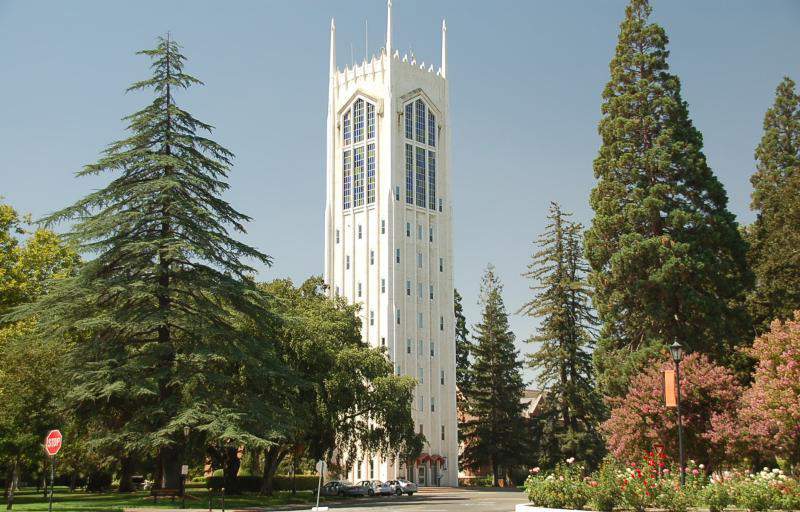
The courses that define it
Every California program teaches law and ethics, assessment and a survey of theories. These are the courses that are not on every list — the ones that tell you what this particular faculty believes therapy is. The quoted text is the catalog’s own; the note underneath each one is mine.
Theories of Multicultural Family Therapy and Collaboration
"This course prepares mental health clinicians to assess functioning in and design and implement interventions for couples and families by studying major theories of couples and family therapy. This course also prepares mental health clinicians to help families collaborate with helping institutions to improve the well-being of children."catalog ↗
Why it is worth noticingThis is the systemic core of the degree and its second half is unusual — ‘collaborate with helping institutions’ is child-welfare and school-system language, not family-therapy-model language. It is a fair signal that the training is aimed at agency and school-adjacent practice rather than private-practice couples work.
Theories of Multicultural Couples Therapy
"This course introduces major theories of couples counseling. It prepares mental health clinicians to assess functioning in couples from diverse backgrounds and to design and implement interventions for couples. Students in this course will study evidence-based approaches to couples counseling, legal and ethical considerations in marriage and couples counseling, relationship violence, and separation and divorce."catalog ↗
Why it is worth noticingThe couples half of the systemic pair, and the only dedicated couples course in the program. Between this and CPSY 328 the entire relational-therapy content of a 62-unit MFT degree is six units — worth weighing against programs that run four or five systemic courses.
Consultation Methods
"This course prepares school psychologists to provide mental health consultation to school personnel and parents. Various consultation methodologies will be studied with applications particularly appropriate to children in the public school system."catalog ↗
Why it is worth noticingRequired in Year 2 Fall of the MFT program of study, and its catalog description does not mention marriage and family therapy at all — it is written for school psychologists. This is the sharpest single illustration of an MFT degree drawing on an education school's existing course pool.
Nature and Conditions of Learning
"Students study both cognitive and traditional learning theories, their applications to instruction and the development of effective teaching strategies. In addition, information processing models are explored and their implications for instruction are addressed."catalog ↗
Why it is worth noticingA teaching-methods course, required in the final summer term. Combined with Consultation Methods that is six of the program's units spent on instruction and school consultation rather than on clinical practice — the clearest cost of the program's location inside Benerd.
Human Sexuality
"This course reviews the basic anatomy, sexual function and response, and challenges and disorders of sexual function. Diagnostic formulations and treatments for the disorders that clinicians are most likely to encounter in clinical practice are also presented."catalog ↗
Why it is worth noticingOne unit, where most California MFT programs run human sexuality as a full three-unit course. It meets the BBS content area, but if sexuality is central to the practice you want, this is a very thin treatment — and it is scheduled in the last term, after your practicum has finished.
Counseling Practicum
The entire catalog description reads: "Counseling Practicum entails the supervised application of psychological procedures in appropriate settings." One sentence.catalog ↗
Why it is worth noticingFor the course that carries every client hour in the degree, this is the least information any of the California programs in this guide publish. There is no practicum handbook, no hour table, no supervision ratio and no partner-site list on Pacific's public site. Ask for the fieldwork manual before you deposit.
The whole degree, term by term
What you would actually take, in the order you would take it. Sequences change; check the current catalog before you count on any single term.
Two years, six terms, cohort-based, on the Stockton campus, delivered in a flexible hybrid format ("whether online or in the classroom") with an accelerated schedule and two summer terms. Course codes below are as published on the program page (EDUC prefix); the 2026–27 academic catalog carries the same courses under a CPSY prefix, which is the current registrar coding — e.g. EDUC 388 Counseling Practicum is CPSY 394. Units below sum to 62, not the 60 the program's press materials quote. course sequence ↗
62 per the published program of study. The 2026–27 catalog frames the same degree as a 15-unit core plus "Select 46 units of the following" for the Marriage and Family Therapy emphasis (61), against a generic MA minimum of 32 units; Pacific's own tuition table lists the MA in Counseling Psychology at "32–63 units." The 60 figure comes from the 2023 launch announcement.units in total
- EDUC 324 Intro to Counseling (1)
- EDUC 201 Techniques of Research (3)
- EDUC 336 Group Counseling (3)
- EDUC 343 Psychopathology and Wellness Promotion (3)
- EDUC 378 Psychotherapeutic Interventions for Children, Adolescents, and their Caregivers (3)
- EDUC 202 Statistical Thinking and Communication (3)
- EDUC 379 Abuse and Crisis Intervention for Families (3)
- EDUC 334 Theories of Multicultural MFT (3)
- EDUC 342 Law and Professional Ethics (3)
- EDUC 349 Psychopharmacology (3)
- EDUC 385 Alcoholism and Chemical Substance Abuse Dependency (3)
- EDUC 346 Psychological Assessment (3)
- EDUC 338 Consultation Methods (3)
- EDUC 328 Couples Therapy (3)
- EDUC 388 Counseling Practicum (3)
- EDUC 393 Advanced Psychotherapeutic Tech (3)
- EDUC 348 Neuropsychology (3)
- EDUC 329 Advanced Human Development (3)
- EDUC 388 Counseling Practicum (3)
- Complete Capstone Experience
- EDUC 387 Human Sexuality (1)
- EDUC 341 History and Systems in Psychology (3)
- EDUC 216 Nature and Conditions of Learning (3)
How practicum actually works
Californian clinical training runs in two legally distinct stages, and the difference decides what a program can and cannot do for you.
A trainee is a student. You see clients while still enrolled, at a site your program approves, supervised by someone the site provides. This is practicum, and it is the stage a program controls. An associate — registered with the Board after you graduate — is no longer a student, is usually paid, and is working toward the 3,000 hours the license requires. The Board renamed this stage from “intern” to “associate” in 2018, so any page still saying “MFT intern” is quoting something out of date.
Hours you bank as a trainee count toward the 3,000, up to a limit, which is why the size and quality of a program’s placement matters long after graduation: a student who leaves with 1,000 hours starts the associate years a third of the way through them, and one who leaves with the 225-hour minimum starts at the beginning.
Practicum is also where a degree most often stops being on schedule. Coursework runs on a calendar the school controls; placement does not. The questions that matter are therefore all about who owns the problem of finding you a site — and the answer differs enormously between programs on this list.
What happens after the degree →
The school does not say
Nothing on this school’s published pages states who secures your placement. That is not the same as a bad answer - but it is the first question to ask admissions, and the specificity of the reply tells you a great deal. Thirty of the seventy-eight are in this position.
Counseling Practicum entails the supervised application of psychological procedures in appropriate settings. the school’s own page →
Pacific publishes less about its practicum than any other program in this set, and that is the finding. What is establishable: it starts in the second year, it runs two terms rather than three, and it carries six of the degree's sixty-two units — EDUC 388 in Year 2 Fall and again in Year 2 Spring, three units each, sitting alongside a full three-course academic load in both terms, which is a heavier concurrent load than programs that thin out the second year for fieldwork. The catalog description for the course is a single sentence: "Counseling Practicum entails the supervised application of psychological procedures in appropriate settings." The only hour figure anywhere in Pacific's own materials is in the 2023 launch story, which describes "an experiential requirement of 280 hours of patient work" and says it will be done "with identified agencies" alongside adjunct faculty — phrasing that implies the program maintains relationships with placement sites rather than leaving students to cold-call, but it is a newsroom paraphrase, not a policy, and Pacific has not published a partner-site list, a placement process, an application timeline or an eligibility gate. There is no published relational (couple/family) sub-minimum, which matters because the BBS requires relational hours for LMFT registration and every other program in this set states one. There is no published supervision ratio, no statement of who supervises on site or what their license must be, no weekly hour expectation, no liability-insurance requirement and no practicum handbook of any kind on the public site. Every one of those is a question to put to the program in writing before depositing, and the absence of answers should weigh more heavily here than it would at a twenty-year-old program, because there is also no cohort of alumni to ask. source ↗
Will this degree travel
Not COAMFTE accredited
That is not a defect — 66 of the 78 institutions on the Board’s list are in the same position, including most of the Cal States, and their graduates license in California every year.
It becomes a problem if you leave. Several states will not accept a non-COAMFTE degree without remedial coursework, and a few will not accept it at all. If there is any chance you move, check the destination board’s rules before you enroll, not after.
What the Board requires of any qualifying degree →
What it is, on paper
Relatively new program. Cannot support an I-20 for international students.
What it costs
The figure below is the institution’s own, from its own page, with the year it applies to. Multiply the per-unit rate by the actual unit count and add campus fees before comparing it with anything.
$1,244 a unit 2026-27 — source
What a month costs to live on while you study →
Getting in
A cumulative GPA of 3.0 or better for the last 60 units of college or post-baccalaureate work source →
How its graduates did on the Board’s exam
Too few candidates to publish a rate
The Board recorded 1 first-time candidates from this school across the whole window, and this page does not print a percentage below 40. On a handful of candidates a single result moves the figure by tens of points, and a small program would be described by noise. It usually means the program is small, new, or both.
Recorded by the Board as University of the Pacific, Stockton. Its list is kept by institution and its names lag: a school that has since renamed appears under the name it had when the candidates sat.
What this number is, and what it is not
It describes candidates, not teaching. In 2022 the Council on Social Work Education removed licensing-exam pass rates from its accreditation standards, saying the data “may not be an equitable measure of program outcomes” — after the social-work exam board’s own analysis found first-time pass rates of 84% for white candidates and 45% for Black candidates. A program that enrolls more career-changers and more students of color will post a lower rate while teaching at least as well. The accrediting body with the most reason to want this metric examined it and stopped using it.
The denominator is not this year’s students. These are people who sat the exam during the window, often several years after graduating and sometimes after the program changed shape or owner.
It is published here because it is a real, official figure that is otherwise almost impossible to find — and it is published on this page only. There is no pass-rate column in the directory, nothing is sorted by it, and no school on this site is ranked against another.
July 2018 - December 2024, pooled (13 semiannual BBS reports) · the Board’s published exam results by school →
What people say about it
Nothing credible was found. Searched by every name variant across Reddit, Student Doctor Network and The GradCafe. Silence is not a verdict — small programs generate little discussion — but a missing section should not read as an endorsement, so it says so.
Threads about the decision itself, rather than about one school →
What to ask before you apply
None of these are answered on a program page, and all five change what the degree is actually worth to you.
The single question that separates programs. Ask for a list of current sites, and ask plainly whether the program places you or expects you to find your own. A rural or online student unable to find a site cannot graduate.
The Board publishes this by school, so the program cannot be the only source. Ask anyway, and see whether the answer matches.
Per-unit rates move. Multiply by the actual unit count and add campus fees before comparing anything.
The 500 couples-and-families hours are carved out of the 1,750 clinical ones, and they are the category associates most often finish short on. A program placing students in adult individual settings will not generate them.
Sometimes yes, sometimes with extra units, sometimes only in one delivery format. Get it in writing rather than from a brochure.
What I could not establish
Everything above is sourced. These are the things I looked for and could not establish - take them to admissions, and note how quickly and precisely they answer.
- Whether the program has produced graduates. It opened fall 2024 on a two-year program of study ending in a Year 2 Summer term, so the first cohort would have finished around August 2026. Pacific has published no commencement note, graduate count, completion rate or alumni profile for it, and no BBS or licensure outcome data exists.
- Licensure outcomes, BBS associate-registration rates and employment outcomes — none published, and the program is too young for meaningful data to exist yet.
- Current enrollment. The only figure anywhere is the pre-launch projection of "approximately 15 to 20 students" for the fall 2024 cohort.
- The entire practicum apparatus: who finds the site, when the search starts, the supervision ratio, the supervisor's required license and tenure, the weekly hour commitment, any relational (couple/family) hour sub-minimum, and any liability-insurance requirement. No practicum or fieldwork handbook is published. The 280-hour figure comes from a university newsroom story, not a policy document.
- The exact unit total is stated three different ways in Pacific's own materials — 60 (2023 launch announcement and press coverage), 61 (2026–27 catalog: 15-unit core plus "Select 46 units" for the MFT emphasis), 62 (the term-by-term program of study on the program page), and "32–63 units" (the Benerd graduate tuition table). Nothing on the public site reconciles them.
- Course prefixes do not match between sources. The program page's plan of study uses EDUC codes (EDUC 388 Counseling Practicum, EDUC 334 Theories of Multicultural MFT); the 2026–27 academic catalog carries the same courses under CPSY (CPSY 394, CPSY 328). At least one of the two is stale. Course descriptions in this file are the catalog's CPSY entries.
- Two courses on the program of study could not be matched confidently to a catalog entry: EDUC 324 Intro to Counseling is listed at 1 unit while the catalog's CPSY 302 Introduction to Counseling is 3 units, and EDUC 393 Advanced Psychotherapeutic Tech appears to correspond to CPSY 322 Advanced Psychotherapeutic Interventions rather than to CPSY 393 Special Topics.
- The catalog's Marriage and Family Therapy emphasis course list does not separately include CPSY 335 Child Abuse Assessment and Reporting or CPSY 334 Spousal and Partner Abuse, Detection, and Intervention — both of which do appear in the Professional Clinical Counseling emphasis list. The MFT track instead carries CPSY 333 Abuse and Crisis Intervention for Families. How the BBS child-abuse and partner-abuse content requirements are satisfied is not spelled out.
- No student discussion of this program exists on Reddit, Student Doctor Network, GradCafe or elsewhere — which is expected for a program two years old, but leaves an applicant with no independent account of what it is like.
- Whether LPCC eligibility can be added. Benerd offers a separate Professional Clinical Counseling emphasis of the same MA, but nothing published says whether an MFT-emphasis student can also earn LPCC eligibility, or at what unit cost. The catalog does say "A single course may be used to fulfill requirements in two or more concentrations, but the units will not count twice."
- Accreditation: no COAMFTE or CACREP accreditation is claimed. Pacific's APA accreditation belongs to the CAPS doctoral internship, which is a different thing entirely and should not be read as accreditation of this master's.
Sources for this page (7)
- MA in Counseling Psychology, Marriage & Family Therapy emphasis — program page and term-by-term program of study
- University of the Pacific Academic Catalog 2026–27 — Master of Arts in Counseling Psychology (PDF, includes all CPSY course descriptions)
- Academic Catalog 2026–27 — Benerd College overview
- Pacific Newsroom, 31 Dec 2023 — "Marriage and family counseling focus of Benerd's new master's program"
- Central Valley Journalism Collaborative, 8 Jan 2024 — San Joaquin Valley therapist shortage and the new Pacific program
- Benerd graduate programs tuition and fees, Stockton
- Benerd Masters Programs index